

 English
  Español
  Deutsch

Content
What a Metallographic Inlay Machine Actually Does
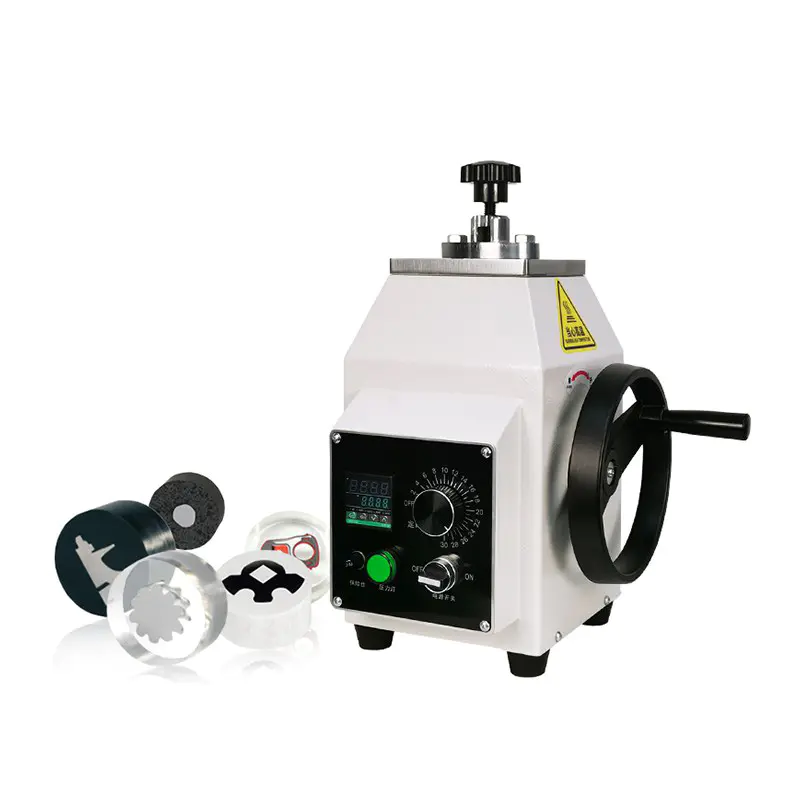
A metallographic inlay machine, more commonly called a mounting press, encapsulates a metal, ceramic, or composite specimen inside a cylindrical block of resin so it can be ground, polished, and examined under a microscope without crumbling, rounding at the edges, or shifting during handling. The "inlay" or "inlaying" terminology comes directly from the metallographic sample preparation workflow: a small, often irregularly shaped piece of material is laid into a mold, surrounded with mounting compound, then subjected to heat and pressure (or left to cure at room temperature) until it forms a solid, uniform puck typically 25mm, 30mm, 32mm, or 40mm in diameter.
This step sits between sample cutting and grinding/polishing in the standard metallographic preparation sequence, and it matters more than most lab technicians initially assume. A poorly mounted sample produces edge rounding that hides decarburization layers, coating thickness, and case-hardening depth — exactly the features a hardness test or microstructure inspection is meant to reveal.
Hot Mounting vs. Cold Mounting: Choosing the Right Method
Most inlay machines on the market are hot-mounting (compression mounting) presses, since this method is faster and produces denser, more uniform mounts for routine lab work. Cold mounting, by contrast, uses a two-part liquid resin poured into an open mold at room temperature and is reserved for samples that cannot tolerate heat or pressure.
| Factor | Hot Mounting | Cold Mounting |
|---|---|---|
| Typical cycle time | 8 to 15 minutes | 20 minutes to several hours |
| Process temperature | 150°C to 180°C | Ambient (no heat applied) |
| Applied pressure | 20 to 30 MPa | None |
| Edge retention | Good to excellent | Excellent with vacuum impregnation |
| Best suited for | Routine metal, ceramic, and composite samples | Heat-sensitive, porous, or crack-prone samples |
Inside the Hot Mounting Cycle
A standard inlay machine cycle runs through three controlled phases, and understanding each one helps explain why mount quality varies so much between operators and machines:
- Heating and compression: the mold chamber heats to the resin's softening point while a hydraulic or pneumatic ram applies steady pressure, forcing the molten resin around every contour of the specimen.
- Holding: temperature and pressure are sustained for several minutes to allow the resin to cross-link and fully cure, which determines final hardness and shrinkage behavior.
- Cooling under pressure: the mold cools while pressure is maintained, preventing the resin from pulling away from the specimen edge as it contracts. Skipping this step is the single most common cause of edge gaps.
Machines with independent heating/cooling water circuits typically complete a cycle 30 to 40 percent faster than air-cooled units, which matters significantly in labs processing dozens of samples per shift.
Mounting Resin Selection
The inlay machine itself is only half the equation; resin choice drives the final result just as much as machine settings do.
- Phenolic (bakelite) resin is the workhorse choice for routine ferrous and non-ferrous samples — low cost, good hardness, but brittle on thin or fragile sections.
- Diallyl phthalate (DAP) resin offers better chemical resistance and is preferred when samples will undergo aggressive etching.
- Conductive resin (carbon- or copper-filled) is required for samples headed to SEM analysis, since it eliminates the need for separate conductive coating.
- Epoxy mounting compound shrinks less than phenolic and is the standard choice when edge retention for coating-thickness measurement is critical.
Key Specifications to Compare Before Purchasing
When evaluating inlay machines for a QA lab or production environment, four specifications consistently separate reliable equipment from units that create bottlenecks:
| Specification | Why It Matters |
|---|---|
| Mold diameter range | Must match the diameter standard your polishing and hardness-testing equipment already uses (commonly 25 to 40mm). |
| Maximum pressure output | Insufficient pressure leaves voids around hard, irregular specimens like weld cross-sections or fracture surfaces. |
| Cooling system type | Water-cooled systems cut cycle times substantially versus passive air cooling, directly affecting daily sample throughput. |
| Programmable cycle memory | Stored recipes for different resins prevent operator-to-operator variation in finished mount quality. |
Common Mounting Defects and Their Causes
Most complaints about inlay machine output trace back to a small set of recurring issues rather than the equipment itself:
- Edge gaps or pull-away: usually caused by releasing pressure before the resin fully cools, or by mismatched thermal expansion between specimen and resin.
- Porosity inside the mount: typically the result of insufficient pressure or resin that wasn't preheated/dried before loading.
- Specimen movement during molding: occurs when the sample isn't centered or stabilized in the mold before the cycle starts, especially on thin or rounded parts.
- Surface staining or resin discoloration: often linked to overheating beyond the resin manufacturer's recommended cure temperature.
Frequently Asked Questions
Is an inlay machine the same as a mounting press?
Yes. "Inlay machine," "inlaying press," and "mounting press" describe the same category of equipment used in metallographic sample preparation; terminology varies mainly by region and supplier.
What sample sizes can be mounted?
Specimen size is limited by the mold cavity diameter and depth selected on the machine; most labs standardize on one or two mold sizes to keep downstream polishing equipment consistent.
Can the same machine run both phenolic and epoxy resin cycles?
Most modern inlay machines support multiple stored programs, allowing the operator to switch between resin types by selecting a different preset temperature, pressure, and hold time rather than manually reconfiguring the machine.

