Inverted Biological Microscope: A Guide to Selection and Application Across Industries
Understanding the right microscope for your laboratory is crucial for achieving accurate and reliable results. While Hangzhou Jingjing Testing Instrument Co., Ltd. specializes in hardness testers and metallographic microscopes for material science, a comprehensive knowledge of different microscope types, including the Inverted Biological Microscope, is invaluable for professionals in related fields. This guide provides an in-depth comparison to help you navigate your options.
Core Concept: Two Designs, Two Worlds
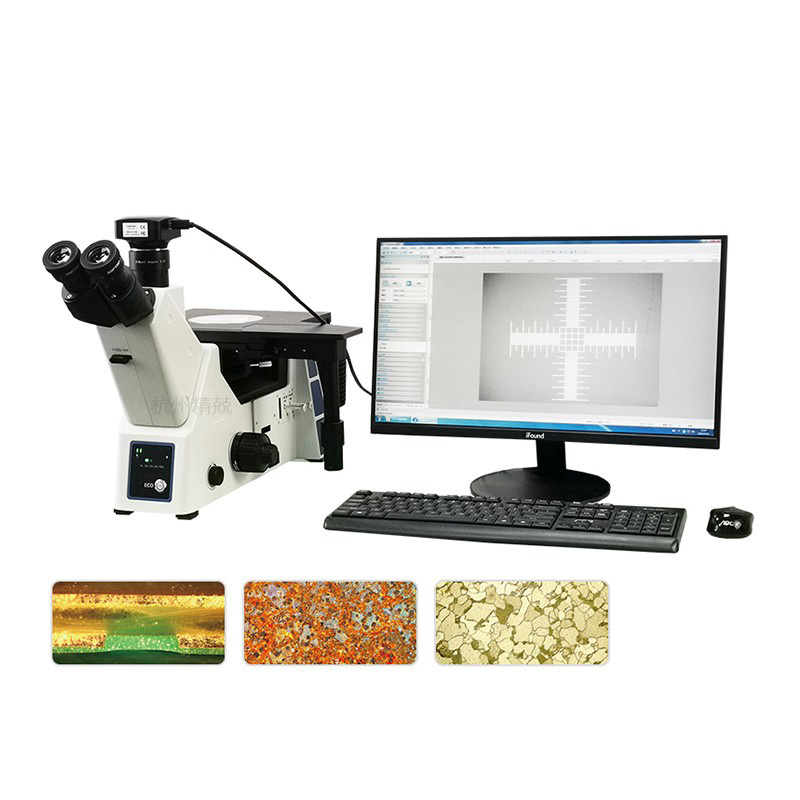
Both "Inverted Biological" and "Inverted Metallographic" microscopes share an inverted design where the objectives are located beneath the stage. This fundamental similarity, however, serves two entirely different scientific purposes, defined by their illumination methods and sample types.
Key Differences at a Glance
| Feature |
Inverted Biological Microscope |
Inverted Metallographic Microscope |
| Primary Application |
Observation of transparent or semi-transparent biological samples (e.g., live cells, tissues). |
Observation of opaque material samples (e.g., metals, ceramics, composites). |
| Observation Target |
Cells in petri dishes, culture flasks, or multi-well plates. |
Polished and etched metal specimens, material surfaces. |
| Illumination Method |
Transmitted Illumination: Light passes through the sample from above. |
Epi-Illumination (Reflected Light): Light travels through the objectives, reflects off the sample surface, and returns. |
| Objective Lens |
Designed for viewing through glass bottoms and culture medium, often with correction collars. |
Optimized for viewing uncoated, opaque surfaces; typically infinity-corrected plan achromatic lenses. |
| Sample Preparation |
Minimal; often involves placing the culture vessel directly on the stage. |
Complex; requires grinding, polishing, and etching of the sample. |
Deep Dive: The Inverted Biological Microscope
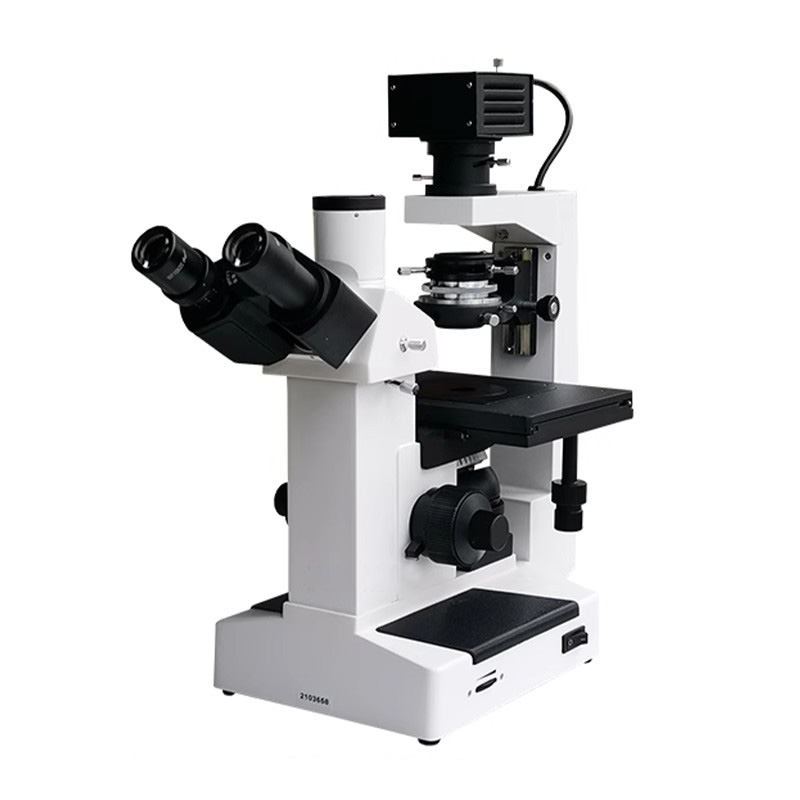
The inverted design is the premier tool for life science research involving cell culture. Its primary advantage is the ability to non-invasively observe cells directly within their culture environment.
Core Technologies and Parameters
- Phase Contrast Observation: Allows for high-contrast imaging of transparent, unstained live cells by converting phase shifts in light into brightness changes.
- Fluorescence Observation: Equipped with fluorescent filter cubes and powerful light sources (LED or mercury) to excite and detect specific molecular markers tagged with fluorophores.
- Environmental Control: Can be integrated with incubation chambers that maintain stable temperature, humidity, and CO₂ levels for long-term live-cell imaging.
- Key Parameters for Selection:
- Magnification Range (e.g., 100x to 400x)
- Camera Resolution (e.g., 5+ Megapixels)
- Long Working Distance Condenser
Making the Right Choice for Your Laboratory
Selecting between an inverted biological and a metallographic microscope depends entirely on your application. Here is a structured guide:
Key Selection Criteria
- Sample Type: Is your sample transparent (biological cells) or opaque (solid material)? This is the most critical deciding factor.
- Imaging Technique: Do you need phase contrast or fluorescence (biological), or brightfield, polarizing, or differential interference contrast (material)?
- Stage Requirements: Do you need a large, motorized stage to accommodate multi-well plates (biological) or a standard stage for flat specimens (material)?
- Software & Analysis: Is your focus on dynamic cell tracking and viability analysis (biological) or static microstructure measurement and grading (material)?
Expert Insight from Hangzhou Jingjing Testing Instrument Co., Ltd.
As a comprehensive enterprise specializing in the production, R&D, and sales of hardness testers, tensile testing machines, and metallographic microscopes, Hangzhou Jingjing Testing Instrument Co., Ltd. possesses deep expertise in precision measurement for material science. Our team of renowned engineers emphasizes that understanding the distinct role of each instrument is key to laboratory efficiency. While our core strength lies in providing solutions for material analysis and quality control, we recognize the importance of cross-disciplinary knowledge. We aim to equip our clients with the information needed to clearly define their requirements—whether analyzing metal grain structures or observing live cell dynamics—and select the most appropriate and effective tool for their specific research and industrial goals.


 English
  Español
  Deutsch