

 English
  Español
  Deutsch

Content
- 1 Unveiling the Core Principles and Applications of Inverted Metallography
- 2 Critical Factors for Selecting the Right Inverted Metallographic Microscope
- 3 Optimizing Workflow from Sample Preparation to Analysis
- 4 Addressing Common Challenges in Inverted Metallographic Microscopy
- 5 The Future of Materials Imaging: Integration and Automation
- 6
- 7 The Role of Expert Support in Maximizing Microscope Value
Unveiling the Core Principles and Applications of Inverted Metallography
The world of materials science hinges on the ability to see and understand the internal structure of solids. Unlike conventional microscopes that view samples from above, the inverted metallographic microscope (IMM) adopts a unique design where the objectives are positioned beneath the stage, looking upwards at a sample that is placed face-down. This fundamental architectural shift unlocks significant advantages for examining prepared metallographic specimens. Primarily, it allows for the analysis of large, heavy, or irregularly shaped samples that would be impractical or impossible to mount on a standard upright microscope. The design inherently provides superior stability for the specimen, minimizing vibration and ensuring consistent, high-resolution imaging of grain boundaries, phases, inclusions, and other critical microstructural features. This instrument is indispensable in fields ranging from industrial quality control and failure analysis to advanced academic research in metallurgy, geology, ceramics, and composite materials. Companies specializing in this field, such as Hangzhou Jingjing Testing Instrument Co., Ltd., leverage their deep technical expertise to develop and provide these sophisticated instruments, ensuring they meet the rigorous demands of modern laboratories through continuous research and development efforts by their team of experienced engineers.
Critical Factors for Selecting the Right Inverted Metallographic Microscope
Choosing an inverted metallographic microscope is a significant investment that impacts laboratory productivity and analytical accuracy. The decision should be guided by a clear understanding of both current needs and future applications. Key technical specifications form the cornerstone of this evaluation. Optical performance, dictated by the quality of objectives, illumination system (often utilizing brightfield, darkfield, and polarized light techniques), and the camera system, is paramount. Mechanical stability, stage travel, and the ease of integrating advanced accessories like hardness testers or digital image analysis software are equally crucial. Furthermore, ergonomic design to reduce user fatigue during long sessions and the availability of comprehensive after-sales support, including maintenance and calibration services, are vital considerations for long-term operational success. Manufacturers and comprehensive suppliers understand that the choice extends beyond the instrument itself to encompass the entire ecosystem of sample preparation, analysis, and support.
Delving deeper into specifications requires a comparison of core features that directly influence performance. The following table outlines the primary considerations when evaluating different models, highlighting how specific features cater to different analytical requirements.
| Feature | Standard/Grade A | Advanced/Grade B | Impact on Application |
|---|---|---|---|
| Optical System | Plan Achromatic objectives, Halogen illumination | Plan Apochromatic objectives, LED illumination with adjustable color temperature | Grade B offers superior color fidelity, flatness of field, and longer lamp life, crucial for precise phase identification and publication-grade imaging. |
| Magnification Range | 50x - 500x (standard objectives) | 20x - 1000x (with long-working-distance objectives) | The broader range in Grade B is essential for examining both overall microstructure and fine details, such as nano-precipitates. |
| Stage Type | Manual mechanical stage | Motorized encoded stage with repeatability | The motorized stage (Grade B) enables automated mapping of large samples and precise relocation of specific features, vastly improving efficiency in failure analysis. |
| Imaging & Software | Basic digital camera with measurement software | High-resolution scientific CMOS camera with advanced analysis software (grain size, inclusion rating) | Grade B transforms the microscope from an observation tool into a quantitative analysis station, directly generating report-ready data. |
| Modularity & Ports | Fixed configuration | Multiple accessory ports for hardness testers, spectrometers, or other probes | Modularity future-proofs the investment, allowing the system to adapt to evolving laboratory needs for integrated testing. |
Understanding User Requirements and Sample Types
The nature of the samples routinely analyzed is the most critical driver in the selection process. A laboratory dedicated to inspecting large welded joints or castings with an inverted metallographic microscope has fundamentally different requirements from one studying thin-film coatings. For large, heavy specimens, the primary considerations are the size and weight capacity of the stage, the stability of the stand to prevent drift, and often, the availability of a low-magnification objective to survey vast areas. Conversely, research into advanced alloys may demand the highest possible numerical aperture (NA) objectives for resolving ultrafine grains, coupled with differential interference contrast (DIC) to reveal subtle topographical differences. The workflow volume is another key factor; high-throughput quality control labs benefit immensely from motorization and software automation, while a university teaching lab might prioritize robustness, ease of use, and lower cost of ownership. A comprehensive supplier’s role is to guide users through this maze of options, ensuring the selected instrument aligns perfectly with its intended mission, supported by pre-sales technical consulting that clarifies these complex trade-offs.
Optimizing Workflow from Sample Preparation to Analysis
The quality of the microscopic image is only as good as the quality of the sample preparation preceding it. The inverted metallographic microscope is the final, critical step in a meticulous chain of processes. A suboptimally prepared sample will yield misleading or unusable data, regardless of the microscope's sophistication. Therefore, understanding and optimizing the entire workflow is essential for any materials laboratory seeking reliable results.
The Imperative of Proper Metallographic Sample Preparation
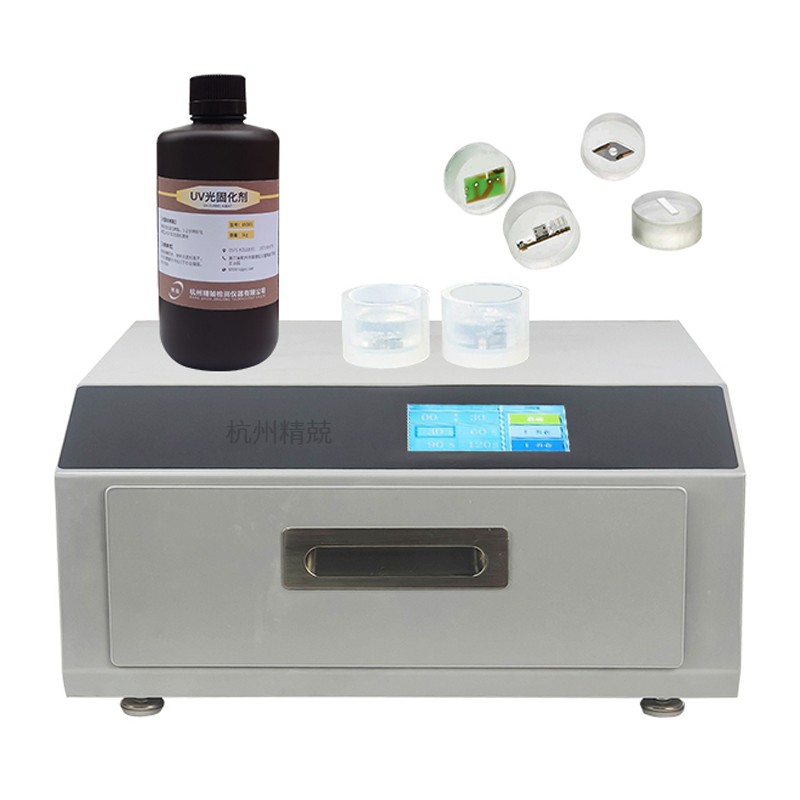
Sample preparation is a multi-stage art and science involving sectioning, mounting, grinding, polishing, and etching. Each step must be executed with precision to reveal the true microstructure without introducing artifacts. Sectioning must be done with minimal heat and deformation. Mounting in resin provides edge retention and handling ease. The grinding and polishing sequence, using progressively finer abrasives, removes the damaged layer from sectioning to produce a flat, scratch-free, mirror-like surface. Finally, selective chemical or electrolytic etching attacks the surface to highlight grain boundaries and different phases. For an inverted microscope, the preparation has an added consideration: the final surface must be perfectly planar to ensure consistent focus across the field of view when placed on the stage. This holistic approach to specimen integrity is a philosophy shared by industry leaders who provide integrated solutions, encompassing not just the microscope but also the full suite of sample preparation equipment like cutting machines, mounting presses, and polishers, ensuring a seamless and reliable workflow from raw sample to quantifiable result.
Advanced Imaging Techniques in Inverted Microscopy
Modern inverted metallographic microscopes are rarely limited to simple brightfield observation. They are platforms for a suite of advanced contrast-enhancing techniques that extract more information from the sample. Darkfield illumination scatters light from surface irregularities into the objective, making edges, cracks, and inclusions appear bright against a dark background, ideal for detecting porosity or non-metallic inclusions. Polarized light is invaluable for examining anisotropic materials like titanium or zirconia, where different grain orientations exhibit varying brightness. Differential Interference Contrast (DIC) uses polarized light and a Wollaston prism to create a pseudo-3D image based on refractive index gradients, exquisitely revealing grain boundaries and phase boundaries without etching. The integration of these techniques into a single, robust system empowers analysts to tackle a wider array of materials challenges. For instance, using darkfield on an inverted metallographic microscope for inclusion analysis is a standard, highly effective method in steel quality control, allowing for rapid assessment and classification of impurity content according to international standards.
Addressing Common Challenges in Inverted Metallographic Microscopy
Even with the best equipment, users can encounter operational challenges that affect image quality and measurement accuracy. Recognizing and troubleshooting these issues is a key skill for any metallographer. Common problems include poor contrast, uneven illumination, vibration blur, difficulty in focusing on uneven samples, and artifacts introduced during sample preparation.
Troubleshooting Image Quality and Illumination Issues
Persistent poor image quality often has a systematic cause. Uneven illumination or a dim image can typically be traced back to the light source. For halogen lamps, checking the bulb age and ensuring it is properly centered in the housing is the first step. For Köhler illumination, which is standard in high-quality microscopes, re-aligning the condenser and field diaphragm is essential to achieve bright, uniform lighting. Vibration, which manifests as blurred or double images, can originate from the microscope table not being sufficiently isolated from floor vibrations or from internal mechanical sources. Placing the microscope on a dedicated vibration-dampening table is often a necessary solution. Another frequent challenge is maintaining focus across a large or slightly warped sample. This is where the inherent stability of the inverted design helps, but for extreme cases, using objectives with a greater depth of field at lower magnifications or employing software-based focus stacking techniques can create a fully focused composite image. These practical problem-solving aspects are where comprehensive technical support proves its worth, with service professionals capable of guiding users through complex alignment procedures or performing on-site maintenance to restore optimal performance.
Maintaining and Calibrating Your System for Longevity
Regular maintenance and calibration are non-negotiable for ensuring the long-term accuracy and reliability of an inverted metallographic microscope, especially when used for quantitative work. A structured maintenance schedule prevents minor issues from becoming major failures.
- Daily/Weekly: Cleaning of external surfaces with a soft cloth; careful cleaning of sample stage to remove abrasive residue; checking and cleaning the protective glass above the objectives if present.
- Monthly/Quarterly: Inspecting and cleaning optical surfaces (eyepieces, objectives, condenser front lens) using appropriate lens tissue and cleaner; checking mechanical stage movement for smoothness and freedom from play; verifying the alignment of the illumination system.
- Annually/Bi-annually: Professional service calibration. This should include verification of magnification accuracy for all objectives, calibration of any integrated digital measurement tools (e.g., stage micrometer calibration for software), inspection of electrical systems, and thorough cleaning of internal optics. This level of service often requires a certified technician.
Adhering to such a schedule, supported by a supplier's metrological management services, ensures the instrument operates as a precision measurement device, not just an observation tool. This is particularly critical for tasks like measuring coating thickness with an inverted metallographic microscope, where a 1% error in magnification can lead to a significant error in reported thickness, potentially affecting product safety or compliance.
The Future of Materials Imaging: Integration and Automation
The evolution of the inverted metallographic microscope is firmly geared towards greater integration, automation, and intelligence. The future lab will see these instruments as central nodes in a connected digital ecosystem. Automation is already advancing rapidly, with systems featuring robotic sample loading, fully motorized focus and stage control, and software that can automatically scan, stitch, and focus on large samples overnight. This not only increases throughput but also removes operator dependency and subjective bias from routine inspection tasks.
Digital Integration and Quantitative Analysis Trends
The line between the optical microscope and a computer-based image analysis station has effectively vanished. Modern systems seamlessly integrate high-resolution digital cameras with powerful software. This software goes beyond simple image capture to offer automated feature recognition, grain size distribution analysis according to ASTM E112, inclusion rating per ASTM E45, phase area fraction measurement, and report generation. The data generated is quantitative, traceable, and easily archived or shared across an organization. This digital thread enables trends to be spotted over time, correlating process parameters with microstructural outcomes. For example, a laboratory can establish a database of microstructures from thousands of samples, using image analysis algorithms to automatically flag batches that deviate from a specified norm. This level of integration supports the modern enterprise's need for data-driven quality management systems and certification compliance, providing the hardware and software backbone for comprehensive quality assurance protocols.
Expanding Applications in Emerging Material Fields
While rooted in traditional metallurgy, the application scope of inverted microscopes is expanding into cutting-edge material science domains. In additive manufacturing (3D printing), they are vital for characterizing the complex, often anisotropic microstructures of printed metal parts, assessing porosity, and validating process parameters. In the development of advanced batteries, they are used to examine electrode cross-sections, study dendrite formation, and analyze degradation mechanisms. The analysis of solar cells, semiconductor packages, and advanced ceramic composites also relies heavily on the ability to examine polished cross-sections of these often delicate or layered structures. The need for high-resolution imaging of semiconductor cross-sections with an inverted microscope exemplifies this trend, requiring exceptional optical performance and often the integration of non-standard illumination like UV or infrared. Furthermore, the technique of in-situ observation of corrosion or high-temperature processes is gaining traction, where specialized stages allow a sample to be subjected to a controlled environment (hot, cold, corroding) while being continuously observed. This dynamic analysis provides insights impossible to obtain from a static, post-mortem examination. Companies at the forefront of instrument development are constantly adapting their offerings to meet these novel challenges, ensuring researchers have the tools needed to innovate.
The Role of Expert Support in Maximizing Microscope Value
The journey with an inverted metallographic microscope extends far beyond the initial purchase. Its true value is realized over its entire operational lifecycle, which is significantly enhanced by expert support and a partnership with a knowledgeable supplier. This encompasses the initial selection process, installation and commissioning, comprehensive user training, ongoing technical support, preventive maintenance, and reliable calibration services. Effective training ensures operators can leverage the full suite of the microscope's capabilities, from basic operation to advanced contrast techniques and software functions, thereby maximizing the return on investment. When technical issues arise, having access to prompt and expert support minimizes costly downtime. Perhaps most importantly, in an era of rapid technological advancement, a strong relationship with a supplier provides a pathway to future upgrades and integration of new technologies, ensuring the laboratory's capabilities remain current. This end-to-end support model, built on professionalism and a commitment to sustainable partnership, is what transforms a sophisticated piece of hardware into a cornerstone of reliable materials analysis for years to come. Guided by a philosophy of sustainable development and a commitment to superior service for equal value, industry participants strive to build these lasting collaborations, supporting their clients in building a future grounded in quality and innovation.

