

 English
 Español
 Deutsch


Outdoor field inspections present unique challenges for hardness testing. Large castings, heavy forgings, and structures that cannot be moved to a laboratory still require reliable hardness verification. The HBC series pin-impact hammer Brinell hardness testers offer a practical solution by bringing the Brinell hardness test to the work piece. This article explains how these testers work and why they are well suited for outdoor field inspections.
Content
- 1 What Is a Pin-Impact Hammer Brinell Hardness Tester?
- 2 Core Components and Working Principle
- 3 Step-by-Step Operation in the Field
- 4 Why HBC Series Is Ideal for Outdoor Field Inspections
- 5 Accuracy Considerations and Best Practices
- 6 Comparing HBC Series with Other Portable Hardness Testers
- 7 Common Outdoor Field Inspection Applications
- 8 Frequently Asked Questions
What Is a Pin-Impact Hammer Brinell Hardness Tester?
A pin-impact hammer Brinell hardness tester is a portable instrument that applies a controlled impact load to a hardened ball indenter. In the HBC series, the test force is set by a sacrificial shear pin rather than by a hydraulic or screw-driven loading mechanism. When the hammer is struck, the shear pin breaks at a precisely calibrated load, allowing the indenter to press into the material with a defined force.
Because the shear pin determines the load, the HBC tester does not require an external power source or complex load cells. This makes it easy to use in remote locations, on scaffolding, or in confined spaces where bench-mounted testers cannot be transported. The result is a genuine Brinell impression that can be measured with the included optical magnifier.
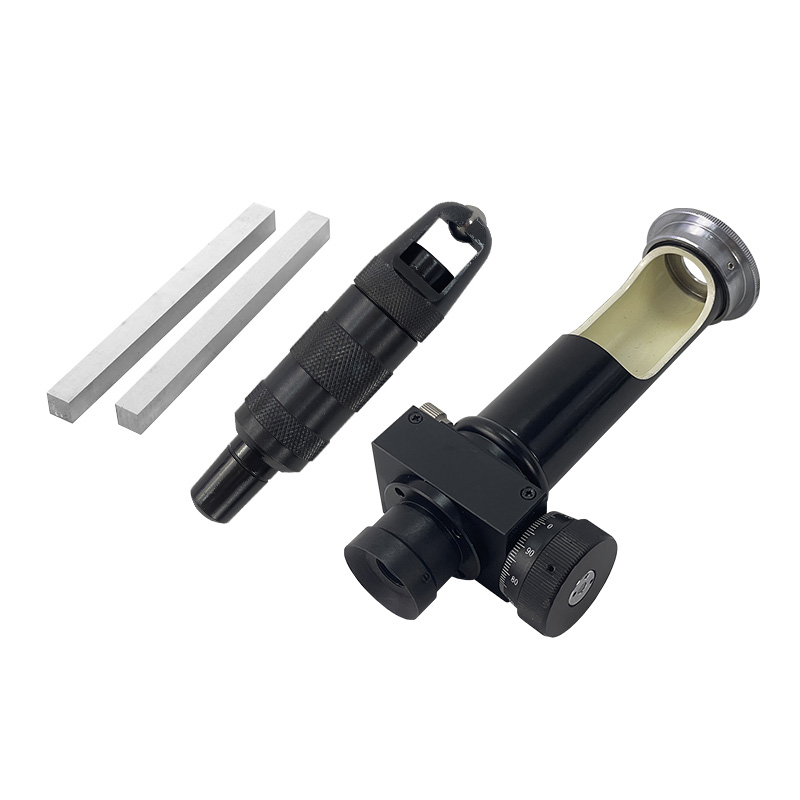 Portable HBC Hammer Brinell Hardness TesterThis lightweight hammer-type tester requires no external power, delivering genuine Brinell impressions via an impact load. It suits remote, confined, or scaffolding locations where bench-mounted testers are impractical, and includes an optical magnifier for reading indentation diameters.View Product →
Core Components and Working Principle
Key Components
The HBC series consists of several functional parts:
- A striking cap and hammer assembly that receives the blow.
- A shear pin that controls the maximum test force.
- A hardened ball indenter, typically tungsten carbide, that creates the indentation.
- A support ring that keeps the indenter perpendicular to the test surface.
- A calibration bar used to verify the performance of the shear pin.
- An optical microscope or magnifier for measuring indentation diameter.
How the Load Is Controlled
When the inspector strikes the hammer, the blow creates a force that travels through the instrument to the shear pin. The shear pin is designed to break at a specific force level, which corresponds to the required Brinell test load. At the moment the pin shears, the load is fully transferred to the indenter, and a standard indentation is formed. Because each new shear pin has the same calibrated breaking point, the test force remains consistent from one measurement to the next.
This mechanical load-limitation principle avoids the need for an electrical feedback system. Because the load is generated by the hammer blow rather than by dead weights, the instrument can be used on angled work pieces without losing accuracy.
Step-by-Step Operation in the Field
Using the HBC series in an outdoor inspection follows a simple sequence:
- Clean the test area with a wire brush or abrasive cloth to remove scale, rust, and loose paint.
- Select the appropriate shear pin for the expected hardness range and insert it into the tester.
- Place the indenter assembly firmly against the prepared surface, ensuring that the support ring is in full contact.
- Strike the hammer with a firm, single blow. Avoid bouncing the hammer or using excessive force.
- Remove the tester and check that the shear pin has broken cleanly. A clean break indicates that the full test load was applied.
- Use the optical magnifier to measure the diameter of the indentation in millimeters.
- Calculate the Brinell hardness number using the conversion table provided with the instrument.
The entire process takes only a few minutes per test, making the HBC series efficient for on-site quality checks.
Why HBC Series Is Ideal for Outdoor Field Inspections
The HBC series offers several benefits that make it a dependable choice for field work:
- Portability: The complete kit fits in a carrying case and can easily be transported to remote sites.
- No power requirement: The tester operates purely mechanically, so it works in areas without electricity.
- Low maintenance: There are no pumps, valves, or electronic displays to fail in harsh environments.
- Direct Brinell correlation: The indentation is a true Brinell impression, which simplifies acceptance criteria based on HBW values.
- Surface tolerance: The method is forgiving of rough surfaces that are common on castings and forgings, as long as the immediate test spot is prepared cleanly.
These characteristics make the HBC series especially useful for incoming material verification, quality audits, and inspection of castings or forgings.
Accuracy Considerations and Best Practices
To obtain reliable results with the HBC series, follow these practices:
- Always prepare the test surface to a smooth and even finish. A rough surface produces an unclear indentation that is difficult to measure.
- Ensure the work piece is thick enough to avoid deformation behind the test spot. As a rule of thumb, the thickness should be at least ten times the indentation depth.
- Space successive indentations far enough apart to avoid work-hardening effects. Usually, a distance of at least three indentation diameters is required.
- Verify the shear pin performance with the calibration bar before each series of tests. A known hardness reference will confirm that the pin breaks at the correct load.
- Clean the indenter ball and support ring regularly when working in dusty or dirty environments.
For inspectors who need to compare Brinell results with other hardness scales, our hardness testing guide provides practical background on Rockwell, Vickers, and Brinell methods.
Comparing HBC Series with Other Portable Hardness Testers
The choice of a portable hardness tester depends on the material, the required accuracy, and the working conditions. The table below summarizes key differences between the HBC pin-impact method, the Leeb rebound method, and laboratory bench Brinell testing.
| Property | HBC Pin-Impact | Leeb Rebound | Bench Brinell |
|---|---|---|---|
| Portability | High | Very high | Low |
| Power source | None | Battery | Electric |
| Test principle | Impact load via shear pin | Rebound velocity | Static hydraulic load |
| Measurement output | Indentation diameter to HBW | HL value with conversion | Direct HBW |
| Typical use | Large castings, forgings, outdoor inspection | Quick sorting, thin or coated parts | Laboratory precision |
The HBC series is preferred when a true Brinell indentation is required at the point of inspection, whereas the Leeb method provides faster, non-destructive readings at the cost of relying on conversion curves.
Common Outdoor Field Inspection Applications
HBC series testers are commonly used in industries where large metal components must be tested on-site. Typical applications include:
- Quality control of heavy steel castings and ductile iron castings.
- Verification of forged shafts, gears, and flanges.
- Maintenance inspections of pipelines, pressure vessels, and structural steel.
- On-site acceptance testing of rollers, dies, and heavy machinery components.
- Field audits at foundries and forging shops before shipment.
In all of these situations, the portable pin-impact design eliminates the need to cut and transport samples to a laboratory, saving time and reducing downtime.
Frequently Asked Questions
Q1: How does an HBC pin-impact tester ensure a consistent test force?
Each shear pin is manufactured to break at a specific force level. When the hammer blow reaches that force, the pin shears and transfers the full load to the indenter. As long as the correct pin is used and breaks cleanly, the test force is repeatable.
Q2: What hardness range can the HBC series measure?
The HBC series is designed for Brinell hardness testing and covers readings typically in the range of 100 to 450 HBW, depending on the selected shear pin and indenter size. Always consult the product specification sheet for the exact range.
Q3: Can I use the HBC tester on curved or cylindrical surfaces?
Yes, if the tester is fitted with the appropriate curved-surface support. The key is to keep the indenter perpendicular to the test spot. Flat surfaces are easiest, but cylindrical parts can be handled with the correct anvil or fixture.
Q4: Why is the calibration bar important?
The calibration bar provides a known hardness reference. By making a test indentation on the bar and comparing the measured hardness with the marked value, you can verify that the shear pin, indenter, and magnifier are all working correctly.
In outdoor field inspections, the HBC series pin-impact hammer Brinell hardness tester provides a rugged, portable, and trustworthy method for verifying the hardness of large metal components. Its mechanical simplicity, combined with the well-established Brinell test principle, makes it a valuable tool for quality engineers, inspectors, and maintenance teams. By understanding how the shear pin controls the test force and by following the recommended operating practices, users can obtain consistent results even in demanding environments.

