

 English
  Español
  Deutsch

Content
- 1 Direct Comparison: Equipment and Consumables Integration
- 2 Sectioning Equipment: Precision and Abrasive Cutting Systems
- 3 Mounting Systems: Hot and Cold Compression Methods
- 4 Grinding and Polishing Equipment: Surface Refinement Systems
- 5 Workflow Integration and Process Optimization
- 6 Quality Control and Standards Compliance
- 7 Industry Applications and Specialized Requirements
- 8 Economic Considerations and Lifecycle Management
- 9 Selection Framework and Procurement Guidance
Direct Comparison: Equipment and Consumables Integration
Metallographic pre-processing equipment encompasses the machinery required for sectioning, mounting, grinding, and polishing samples, while metallographic consumables include the abrasive papers, polishing cloths, diamond suspensions, and mounting media that enable these processes. Successful metallographic sample preparation requires matching consumables to equipment specifications, with silicon carbide grinding papers ranging from 180 to 2000 grit for progressive refinement, diamond suspensions of 0.25 to 9 microns for final polishing, and thermosetting or cold mounting resins selected based on sample characteristics and analysis requirements.
Sectioning Equipment: Precision and Abrasive Cutting Systems
Metallographic sectioning begins with cutting equipment designed to extract representative samples while minimizing thermal and mechanical damage. Abrasive cutting machines utilize bonded abrasive wheels rotating at controlled speeds with integrated coolant systems to prevent heat-induced microstructural alterations. These systems handle a wide range of metals and alloys where productivity and versatility are required, though they may leave a deformation layer that must be removed during subsequent grinding stages.
Precision cutting equipment serves applications requiring fine sectioning of delicate specimens, thin cross-sections, or materials where structural preservation is critical. These machines employ thin diamond or abrasive blades with adjustable feed rates and controlled cutting speeds to produce minimal deformation and clean edges. Precision cutters accommodate angular cuts and are essential for sectioning close to features of interest with minimal material loss. Advanced models incorporate automated XY tables for straight or angled sectioning of flat and irregular specimens.
Cutting Consumables and Specifications
Abrasive cut-off wheels are selected based on material hardness and desired cutting characteristics. Aluminum oxide wheels suit ferrous materials, while silicon carbide wheels perform well on non-ferrous metals and ceramics. Diamond cutting wheels provide superior performance for extremely hard materials including sintered carbides and ceramics. Coolant selection is critical, with water-based solutions containing rust inhibitors and biocides preventing corrosion and microbial growth in the cutting system.
Mounting Systems: Hot and Cold Compression Methods
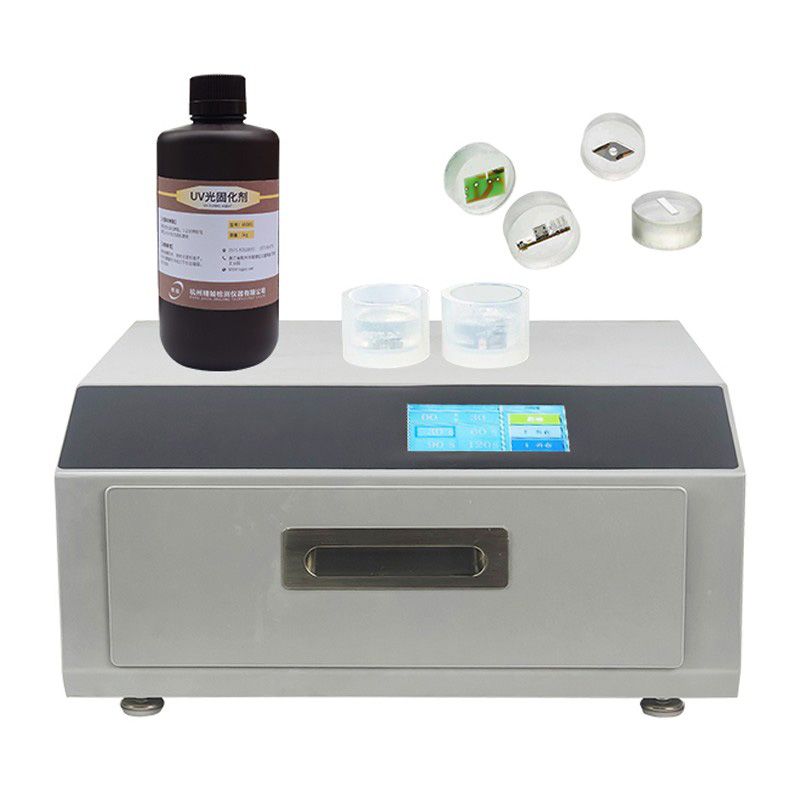
Mounting equipment stabilizes small, irregular, or fragile specimens for handling and protects edges during grinding and polishing operations. Hot mounting presses utilize thermosetting resins such as phenolic (Bakelite), epoxy, or acrylic compounds that cure under heat and pressure. Standard hot mounting cycles operate at temperatures of 180°C and pressures of 25 MPa for approximately 3 to 8 minutes depending on resin type and specimen size. Automatic mounting systems reduce human error and increase throughput by automating heating and cooling cycles.
Cold mounting systems accommodate temperature-sensitive materials or large production volumes where queue time must be minimized. Castable mounting compounds including acrylics and epoxies cure at room temperature without applied pressure. Acrylic systems offer rapid curing times of 5 to 10 minutes suitable for high-volume applications. Epoxy systems provide superior edge retention and chemical resistance for demanding applications but require longer curing periods of 1 to 24 hours. Vacuum impregnation systems remove air from porous specimens before mounting to ensure complete resin penetration.
| Parameter | Hot Mounting | Cold Mounting |
|---|---|---|
| Processing Time | 3-8 minutes | 5 minutes to 24 hours |
| Temperature Exposure | 150-180°C | Room temperature |
| Edge Retention | Good to excellent | Excellent |
| Suitable for Heat-Sensitive Materials | No | Yes |
| Common Resin Types | Phenolic, Epoxy, Acrylic | Acrylic, Epoxy, Polyester |
Grinding and Polishing Equipment: Surface Refinement Systems
Grinding and polishing machines represent the most critical stage of metallographic preparation, transforming sectioned and mounted specimens into mirror-finished surfaces suitable for microscopic examination. Manual systems provide cost-effective solutions for low-volume applications, featuring single or dual rotating platens with speeds typically ranging from 50 to 1000 rpm. These machines accommodate grinding discs of 200 to 300mm diameter and allow operators to control pressure and timing based on material response.
Semi-automatic and fully automatic grinding polishing systems deliver consistent results while reducing operator variability. These machines feature programmable parameters including platen speed, applied force, and preparation time. Automated heads with individual piston pressure enable simultaneous preparation of multiple specimens, each with precisely controlled force. Advanced systems incorporate removal measurement capabilities and automatic dispensing of lubricants and suspensions. Dual-disc configurations allow grinding on one disc and polishing on the other, enabling efficient workflow in high-throughput environments.
Grinding Consumables: Progressive Abrasion
Silicon carbide abrasive papers form the foundation of metallographic grinding, available in grit sizes from 180 for coarse material removal to 2000 for fine grinding approaching polishing quality. The grinding sequence typically progresses through 320, 400, 600, 800, and 1200 grits, with each step removing scratches from the previous stage. Diamond grinding discs provide extended life and consistent cutting action for hard materials, available in resin-bonded formats with grit sizes from 80 to 1200. Zirconium oxide discs offer aggressive stock removal for ferrous materials.
Polishing Consumables: Final Surface Preparation
Final polishing employs diamond suspensions or pastes ranging from 9 microns for initial polishing to 0.25 microns for final mirror finishes. Polycrystalline diamond suspensions provide superior material removal rates and surface quality compared to monocrystalline alternatives. Polishing cloths are selected based on material hardness and desired finish quality, with woven synthetic fabrics for general-purpose polishing and napped cloths for final polishing of soft materials. Alumina suspensions serve as economical alternatives for soft metals and non-ferrous materials.
Workflow Integration and Process Optimization
Effective metallographic preparation requires systematic workflow integration from sectioning through final polishing. Each stage must remove damage introduced by previous operations while minimizing new deformation. Sectioning parameters including blade speed, feed rate, and coolant flow must be optimized for material hardness and specimen geometry. Mounting compound selection considers chemical compatibility with etchants and thermal stability during automated preparation cycles.
Grinding and polishing protocols follow established standards including ASTM E3 for specimen preparation and ASTM E407 for etching procedures. The grinding sequence removes the deformation layer introduced during cutting, with each successive abrasive grade oriented perpendicular to the previous scratches to facilitate visual confirmation of complete scratch removal. Polishing times and pressures are optimized based on material hardness, with softer materials requiring lower pressures and shorter durations to prevent relief and edge rounding.
Quality Control and Standards Compliance
Metallographic preparation equipment and consumables must comply with international standards to ensure reproducible results across laboratories. ASTM E3 defines standard practices for preparation of metallographic specimens, covering sectioning, mounting, grinding, and polishing procedures. ASTM E112 provides methods for determining average grain size in prepared specimens. ISO 643 establishes micrographic determination of apparent grain size in steels, while ISO/TR 20580 offers guidance on preparation methods for both optical and electron microscopy.
Equipment validation includes verification of platen flatness, speed accuracy, and force calibration on grinding polishing systems. Temperature uniformity and pressure consistency are verified on mounting presses. Consumable quality control addresses abrasive particle size distribution, diamond suspension concentration, and resin curing characteristics. Proper documentation of preparation parameters including abrasive grades, polishing cloths, suspensions, and times enables reproducibility and traceability for quality-critical applications.
Industry Applications and Specialized Requirements
Aerospace and automotive industries demand metallographic preparation systems capable of handling diverse materials including steels, aluminum alloys, titanium, and composites. Failure analysis applications require preservation of fracture surfaces and delicate microstructural features, necessitating precision cutting and gentle grinding protocols. Electronics manufacturers prepare solder joints, plated coatings, and semiconductor materials requiring specialized mounting and polishing approaches to prevent damage to fragile structures.
Research and development laboratories utilize full-automatic preparation systems with programmable recipes for consistent results across operator changes. Production quality control environments prioritize throughput and consistency, favoring automated systems with multiple specimen capacity. Field metallography applications require portable equipment including battery-powered grinders and compact polishing systems for on-site analysis of large components or infrastructure where laboratory access is impractical.
Economic Considerations and Lifecycle Management
Metallographic equipment investments range from $2,000 for basic manual grinding polishing machines to $50,000 or more for fully automated systems with advanced features. Consumables represent ongoing operational costs, with silicon carbide papers requiring replacement after 10 to 30 specimens depending on material hardness, and diamond suspensions providing extended service life when properly maintained. Magnetic polishing systems reduce consumable costs by enabling rapid disc and cloth changes without adhesive residues.
Preventive maintenance extends equipment service life and ensures consistent preparation quality. Grinding polishing machines require periodic inspection of platen condition, drive belt tension, and bearing lubrication. Cooling systems need water quality maintenance and filter replacement to prevent contamination of specimens. Mounting presses require heating element inspection and platen surface maintenance to ensure uniform heat transfer. Proper training of operators in equipment operation and consumable selection maximizes return on investment through reduced rework and improved sample quality.
Selection Framework and Procurement Guidance
Procurement of metallographic pre-processing equipment requires systematic evaluation of sample volume, material diversity, and quality requirements. Low-volume laboratories may achieve satisfactory results with manual equipment and basic consumables. High-throughput environments benefit from automated systems with programmable recipes and multiple specimen capacity. Material diversity influences equipment specifications, with hard ceramics and sintered carbides requiring diamond cutting and grinding capabilities while soft metals demand gentle polishing protocols.
Consumable procurement should establish reliable supply chains with consistent quality and competitive pricing. Bulk purchasing of frequently used items such as silicon carbide papers and standard polishing cloths reduces per-unit costs. Evaluation of alternative suppliers should include quality verification through comparative testing to ensure equivalent performance. Integration of equipment and consumables from single-source suppliers may simplify procurement and technical support while multi-sourcing strategies provide flexibility and cost optimization for high-volume operations.

