Brinell Hardness Tester: An Essential Guide for Industrial Quality Control
In the world of material testing, hardness measurement is a fundamental pillar of quality assurance. Among the various methods available, the Brinell Hardness Tester stands out for its reliability and unique advantages, particularly for coarse-grained and non-homogeneous materials. This guide delves into the principles, applications, and selection criteria for this indispensable instrument.
1. Brinell Hardness Tester Basics: Principles, Key Parameters, and Applications
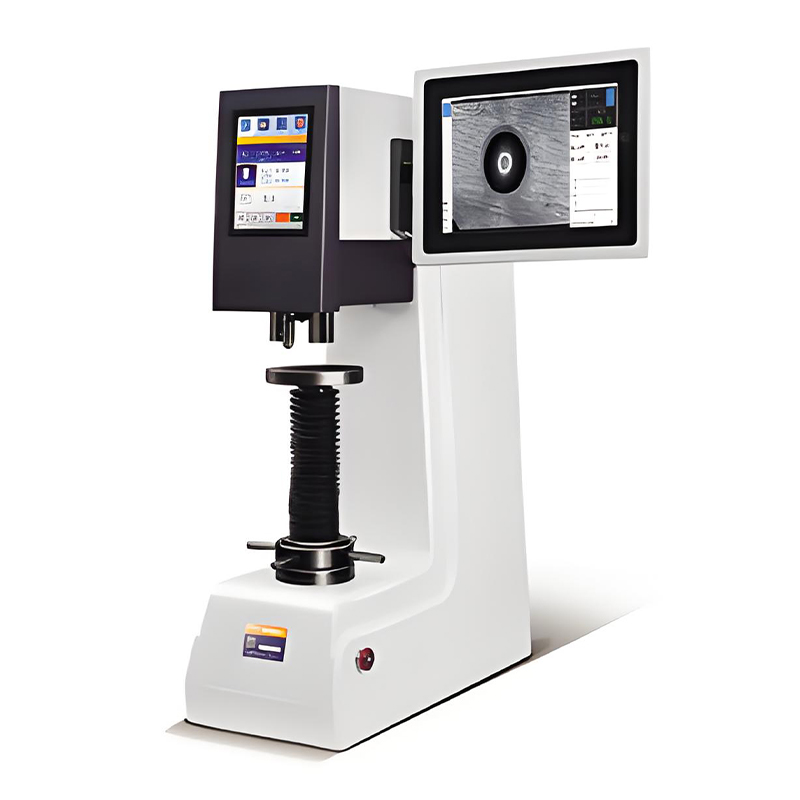
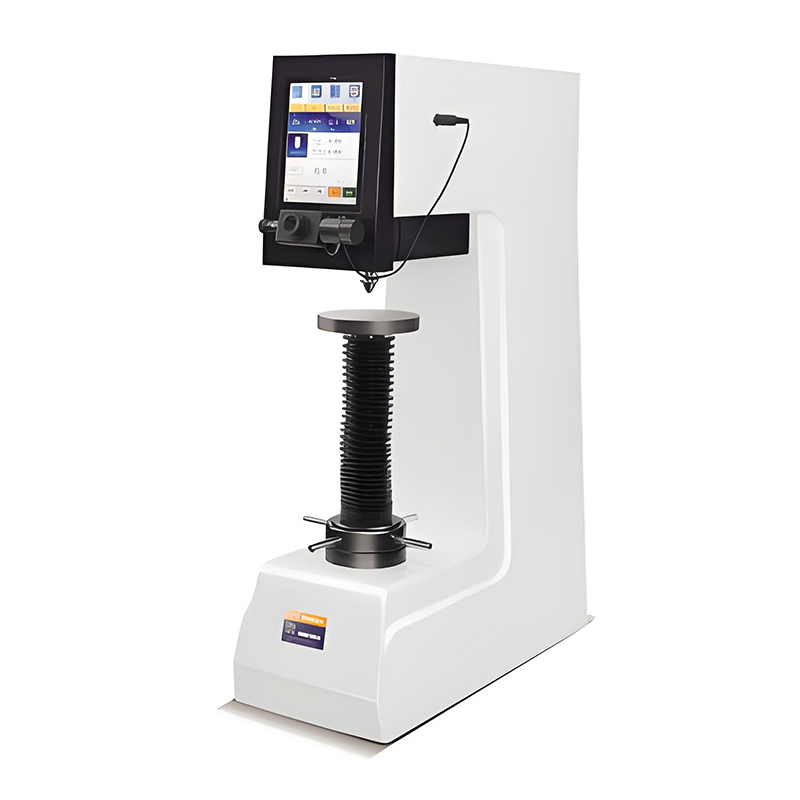
The Brinell test is one of the oldest and most trusted methods for determining material hardness. Its core principle involves applying a specific load to a hardened carbide ball indenter and measuring the diameter of the resulting impression to calculate a hardness value.
Core Parameters and Specifications:
- Test Force (F): Common ranges include 250 kgf, 500 kgf, 750 kgf, 1000 kgf, and 3000 kgf.
- Indenter: Tungsten Carbide Ball with standard diameters of 2.5mm, 5mm, and 10mm.
- Hardness Scale: Designated as HBW (e.g., HBW 10/3000), where "W" indicates the use of a carbide ball.
- Applicable Standards: GB/T 231.2, ISO 6506, ASTM E10.
2. Choosing the Right Hardness Test: Brinell vs. Rockwell vs. Vickers
Selecting the appropriate hardness testing method is critical for accurate results. Here’s a comparative overview:
| Method |
Brinell (HBW) |
Rockwell (HRC/HRB) |
Vickers (HV) |
| Principle |
Large ball indenter, measures impression diameter. |
Differential depth measurement with a diamond cone or ball. |
Pyramidal diamond indenter, measures diagonal length. |
| Key Parameters |
High test force, ball indenter (e.g., 10mm, 3000kgf). |
Pre-load + main load, various scales (e.g., HRC, HRB). |
Wide force range, diamond pyramid indenter. |
| Best For |
Castings, forgings, coarse-grained materials. |
Hardened steels, heat-treated components. |
Thin materials, surface layers, all material types. |
| Indentation |
Large, provides an "average" hardness. |
Small and shallow, minimal surface damage. |
Small, geometrically similar across scales. |
3. The Unmatched Role of Brinell Testing in Casting and Forging Industries
Why is the Brinell tester the go-to instrument for foundries and forging plants served by companies like Hangzhou Jingjing Testing Instrument Co., Ltd.? The answer lies in its large indentation. This large impression covers multiple grains within the material's microstructure, effectively averaging out variations and providing a "bulk" or "macro" hardness value. This makes it the most reliable indicator for assessing the overall mechanical properties and quality consistency of cast and forged components, where material homogeneity can be a concern.
4. The Complete Brinell Hardness Testing Workflow: From Sample Prep to Result
Accurate Brinell testing requires a meticulous process:
- Sample Preparation: The test surface must be relatively smooth (typical roughness Ra < 1.6μm) and parallel.
- Testing Procedure: Select the correct force-ball combination (as per standard), apply the load smoothly, and maintain it for the specified dwell time (typically 10-15 seconds).
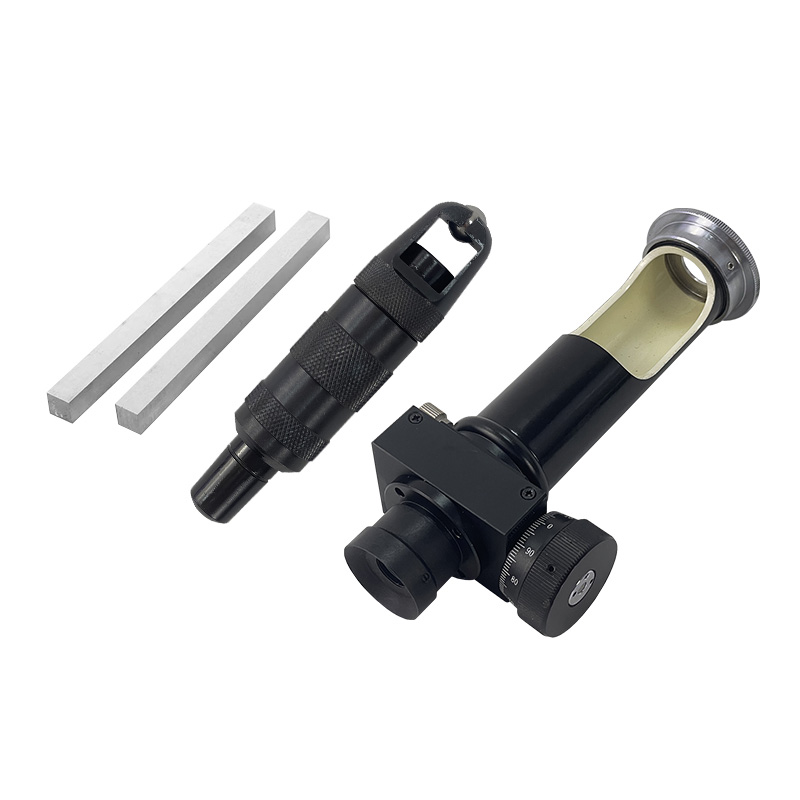
- Indentation Measurement: Use a precision optical measuring system (integrated microscope) to measure the indentation diameter in two perpendicular directions (d1 and d2) and calculate the average.
- Result Calculation: The Brinell Hardness Number (HBW) is calculated using the formula HBW = 0.102 × F / (πD/2 × (D - √(D² - d²))) or, more commonly, determined using reference tables.
5. Expert Insight: Ensuring Long-Term Accuracy and Stability of Your Brinell Hardness Tester
As a comprehensive enterprise specializing in the production, R&D, and metrology management of hardness testers, Hangzhou Jingjing Testing Instrument Co., Ltd. emphasizes that precision is not a one-time event but a continuous process. Maintaining the long-term accuracy of a Brinell tester hinges on:
- Regular Calibration: Periodic calibration against certified reference blocks is non-negotiable to ensure traceability and accuracy.
- Optical System Care: The lens and graticule of the measuring microscope must be kept clean and damage-free.
- Proper Handling: Avoiding overloading and mechanical shock protects the load frame and force-applying system.
Leveraging its team of renowned engineers, Hangzhou Jingjing Testing Instrument Co., Ltd. not only supplies high-precision Brinell testers but also provides critical supporting services like maintenance and recalibration, ensuring that clients' equipment consistently delivers reliable data that meets stringent international and domestic standards.


 English
  Español
  Deutsch