

 English
  Español
  Deutsch

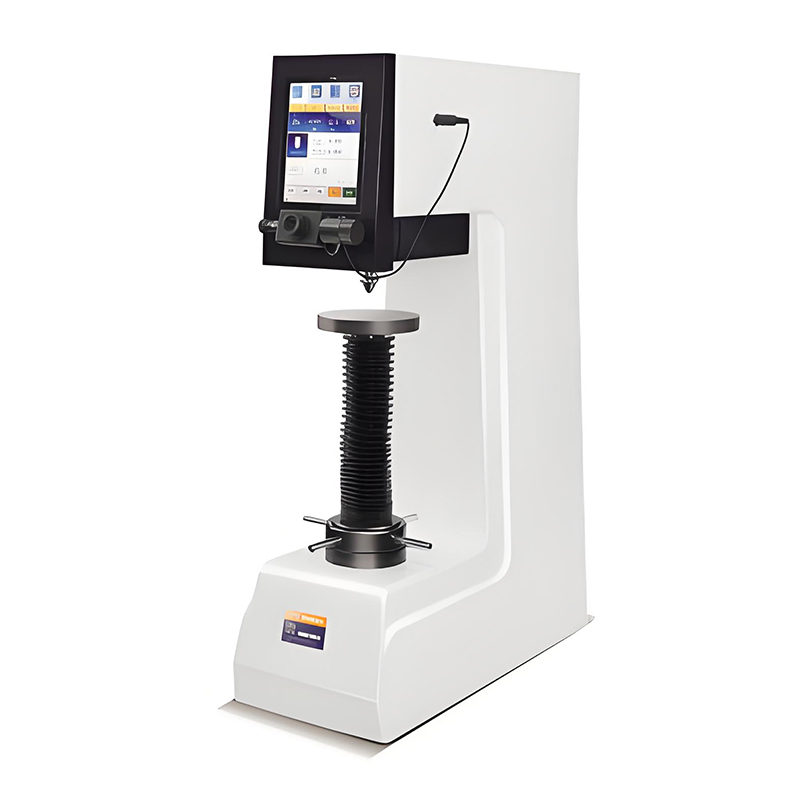
In the world of materials science and quality control, precise measurement is paramount. The digital microhardness tester stands as a critical instrument for evaluating the hardness of materials on a microscopic scale. Unlike traditional methods, it offers digital precision, automated workflows, and detailed data analysis, making it indispensable for research, development, and industrial inspection. This guide delves into the core principles, diverse applications, and key considerations for selecting the right instrument for your needs.
Content
- 1 Understanding Digital Microhardness Testing
- 2 Key Applications Across Industries
- 3 How to Select the Right Digital Microhardness Tester
- 4 Commitment to Precision and Partnership
- 5
- 6 Frequently Asked Questions (FAQs)
- 6.1 1. What is the main difference between a digital microhardness tester and a traditional one?
- 6.2 2. When should I choose the Knoop method over the Vickers method?
- 6.3 3. How often does a digital microhardness tester need to be calibrated?
- 6.4 4. Can I test very small or irregularly shaped components?
- 6.5 5. What are the most critical factors for achieving accurate thin film hardness measurements?
Understanding Digital Microhardness Testing
Digital microhardness testing is an advanced method for determining a material's resistance to permanent indentation using precisely controlled forces and a diamond indenter. The process is digitally managed, ensuring high repeatability and accuracy.
Core Principles of Operation
Indentation Process
- A geometrically defined diamond indenter (Vickers or Knoop) is pressed into the material's surface with a specific force.
- The force is applied and maintained for a standardized dwell time.
- After removal, the instrument's high-resolution optical system measures the diagonal lengths of the residual impression.
Digital Calculation and Output
- The measured diagonals are processed by sophisticated software.
- Hardness values (HV or HK) are automatically calculated based on the applied force and indentation area.
- Results, along with test parameters and images, are digitally displayed, stored, and can be exported for reports.
Vickers vs. Knoop Scales: Choosing the Right Method
Selecting between Vickers and Knoop methods is crucial for accurate results. The Vickers method uses a pyramid-shaped indenter and is suitable for a wide range of materials, providing a relatively large indentation that is easier to measure. In contrast, the advantages of Knoop microhardness testing are most evident for very hard or brittle materials and thin coatings. Its elongated, shallow indenter creates a much longer diagonal, allowing for more precise measurement at very low forces and minimizing the risk of cracking.
| Feature | Vickers Method | Knoop Method |
|---|---|---|
| Indenter Shape | Pyramid (square base) | Rhombic-based pyramid |
| Indentation Shape | Square | Elongated Rhombus |
| Best For | General-purpose testing, wider material range | Very hard/brittle materials, thin layers, anisotropic materials |
| Sensitivity to Surface Condition | Moderate | Lower (due to shallow depth) |
Key Applications Across Industries
The precision of digital microhardness testers unlocks capabilities far beyond basic hardness checks.
Metallurgy and Materials Science
- Phase Analysis: Measuring hardness differences between microstructural constituents like martensite and ferrite in steel.
- Heat Treatment Verification: Assessing the effectiveness of processes like case hardening by creating hardness depth profiles.
- Coating and Surface Engineering: Evaluating the hardness of thin films, thermal spray coatings, and nitride layers.
Quality Control in Manufacturing
- Batch Consistency: Ensuring produced components like bearings or cutting tools meet specified hardness standards.
- Weld Inspection: Analyzing the Heat-Affected Zone (HAZ) to check for softening or hardening.
- Failure Analysis: Investigating fracture origins by mapping hardness around a crack initiation point.
Advanced and Specialized Uses
For researchers and engineers working with delicate or complex samples, understanding the procedure for testing thin film hardness is essential. This requires ultra-low test forces, specialized indenters like Knoop, and meticulous surface preparation to ensure the substrate does not influence the measurement. Similarly, when performing a microhardness test on welded joints, the goal is to map the hardness gradient across the base metal, HAZ, and weld metal to validate the welding procedure and joint integrity. Furthermore, a portable digital microhardness tester brings the lab to the field, enabling on-site inspection of large components, historical artifacts, or installed equipment where sample removal is impossible.
How to Select the Right Digital Microhardness Tester
Choosing an instrument is a significant investment. Key technical and operational factors must be balanced with your specific application needs.
Critical Technical Specifications
Force Range and Resolution
- Determine the minimum and maximum forces required for your samples (e.g., 10gf to 1kgf).
- Higher force resolution allows for finer control, especially at lower loads.
Optical System and Camera
- High-magnification objectives (e.g., 40x, 100x) and a high-resolution camera are vital for clear indentation imaging.
- Motorized turrets and auto-focus features significantly enhance testing speed and repeatability.
Software Capabilities
- Software should offer automated measurement, customizable report generation, and statistical analysis.
- Look for features like hardness profile mapping and conformity testing against standards.
Evaluating Usability and Support
Beyond specifications, long-term value is derived from ease of use and reliable support. A user-friendly interface with guided workflows reduces operator error and training time. Compliance with international standards (ASTM E384, ISO 6507) is non-negotiable for recognized results. Perhaps most importantly, comprehensive on-site microhardness tester calibration services are the cornerstone of data integrity. Regular, professional calibration ensures traceability and accuracy over the instrument's lifetime. Furthermore, accessible technical support and available digital microhardness tester spare parts minimize downtime and protect your investment, ensuring the instrument remains operational for years to come.
Making a Balanced Decision
Weigh initial cost against total cost of ownership, which includes calibration, maintenance, and potential upgrades. Ensure the chosen model can handle your current sample size and geometry, and consider future needs to avoid premature obsolescence.
Commitment to Precision and Partnership
At Hangzhou Jingjing Testing Instrument Co., Ltd., we understand that a digital microhardness tester is more than just an instrument; it's a vital component of your quality assurance and research framework. Guided by our philosophy of "Sustainable Development," we uphold the principle of "Better price for equal quality; better service for equal price."
Our comprehensive approach ensures you receive a solution tailored to your challenges:
- Expert Consultation: Our team of highly regarded engineers helps you select the optimal instrument configuration, whether for intricate microhardness test on welded joints or routine quality checks.
- Integrated Solutions: With a product portfolio spanning over a thousand items, we can support your entire testing ecosystem, from sample preparation with metallographic equipment to final hardness verification.
- End-to-End Support: We are committed to delivering professional service through pre-sales consulting, in-depth technical training, and reliable after-sales support, including access to genuine digital microhardness tester spare parts.
- Nationwide Service Network: Our extensive distributor network across key industrial regions in China enables us to provide prompt and comprehensive after-sales support and on-site microhardness tester calibration services.
We are dedicated to partnering with our customers to build a bright future through precision measurement and unwavering support. We sincerely welcome your inquiries and look forward to exploring long-term collaboration.
Frequently Asked Questions (FAQs)
1. What is the main difference between a digital microhardness tester and a traditional one?
The core difference lies in automation and precision. Digital testers automate the force application, dwelling, and, most importantly, the measurement of the indentation via a digital camera and software. This eliminates human error in reading the indentation diagonals, drastically improves repeatability, and enables advanced data processing and reporting compared to manual optical measurement.
2. When should I choose the Knoop method over the Vickers method?
Choose the Knoop method when testing very hard or brittle materials (like ceramics), thin coatings where you must avoid substrate influence, or materials with anisotropic hardness (hardness that varies with direction). The Knoop indenter's shallow, elongated shape creates a longer diagonal that is easier to measure at low forces and is less likely to cause cracking in fragile samples.
3. How often does a digital microhardness tester need to be calibrated?
Calibration frequency depends on usage intensity, environmental conditions, and quality system requirements (e.g., ISO 17025). Typically, an annual calibration by an accredited service is recommended. For critical applications or high-volume labs, semi-annual checks might be necessary. Regular verification using certified hardness test blocks is also advised between formal calibrations.
4. Can I test very small or irregularly shaped components?
Yes, but it requires careful setup. Many testers offer custom fixtures and stages to hold small parts. For irregular shapes, you may need to use potting materials (like mounting resin) to secure the sample. The key is ensuring the test surface is perpendicular to the indenter and the sample is rigidly held to prevent movement during indentation.
5. What are the most critical factors for achieving accurate thin film hardness measurements?
Accurate thin film testing hinges on three factors: using an ultra-low force range to confine the indentation within the film, selecting a suitable indenter (Knoop is often preferred for its shallow penetration), and applying the "10% rule" – the indentation depth should be less than 10% of the film thickness to minimize substrate effect. Impeccable surface preparation is also essential.

