

 English
  Español
  Deutsch

Metallographic cutting, or sectioning, is the first and one of the most destructive steps in specimen preparation. A rotating abrasive wheel or diamond blade removes material at high speed, and most of the mechanical energy involved is converted into heat. If that heat is not controlled, it alters the very microstructure the sample is meant to reveal. This article explains why thermal damage occurs during metallographic cutting and how coolants prevent it, so your specimens stay accurate and artifact-free from the very first cut.
Thermal damage is easy to miss in the early stages. The cut surface may still look clean, with nothing more than light discoloration, yet the damage can already extend below the visible surface. The causes are well understood, and so is the remedy. A properly selected and applied coolant, used with the right blade, speed, and feed rate, keeps the sample below the critical temperature for the entire duration of the cut.
Content
- 1 Why Thermal Damage Occurs During Metallographic Cutting
- 2 How Thermal Damage Alters the Microstructure
- 3 How Coolants Prevent Thermal Damage
- 4 Selecting and Applying the Right Cutting Coolant
- 5 Best Practices for Preventing Thermal Damage
- 6 Frequently Asked Questions About Thermal Damage and Coolants
- 7 Consistent Cooling Is the Foundation of Reliable Metallography
Why Thermal Damage Occurs During Metallographic Cutting
Thermal damage is not a single event but the result of several interacting variables. The most common causes are:
- Friction between the blade and the workpiece. The abrasive grains of a cut-off wheel rub against the metal and generate heat at the contact point. The higher the friction coefficient, the more heat is produced.
- Excessive cutting speed. Wheel speeds that are too high for the workpiece material increase the amount of energy delivered per unit of time. Soft alloys, high-strength steels, and low-conductivity metals are especially sensitive.
- Excessive feed force and feed rate. When the blade is forced into the workpiece faster than the abrasive can actually cut, the wheel begins to rub and crush the metal instead of clearing it, producing intense localized heating.
- Inadequate coolant delivery. Cutting without coolant, or with a stream that does not reach the contact zone, allows heat to accumulate in the sample and the blade.
A dull blade, a wheel bond that is too hard for the material, poor clamping that permits vibration, and continuous cutting without relief also contribute. When several of these factors combine, the surface temperature can climb above the transformation temperature of the material within seconds.
| Cut Variable | Heat Effect | Typical Artifact |
|---|---|---|
| High cutting speed | More energy per unit time | Surface discoloration, burn |
| High feed force | Rubbing instead of cutting | Smearing, deformation layer |
| Dull or mismatched blade | Higher friction | Re-hardening, microcracks |
| Missing or weak coolant | Heat accumulation | Phase transformation, cracks |
How Thermal Damage Alters the Microstructure
Thermal damage is dangerous because it changes the structure and properties of the material before the sample ever reaches the microscope. The artifacts most frequently observed are:
- Re-hardening in steels. If the surface is heated above the austenitizing temperature and then quenched by the cooler bulk metal, it transforms into hard, brittle untempered martensite. This layer produces hardness readings that have nothing to do with the original material.
- Over-tempering and softening. At lower temperatures, heat can over-temper the near-surface structure, reducing hardness and making a correctly heat-treated component appear weak.
- Phase transformation in non-ferrous alloys. Titanium alloys, aluminum alloys, and nickel-based superalloys can undergo recrystallization, grain growth, or the precipitation of unwanted phases.
- Oxidation and temper colors. Even moderate heating produces oxide films that appear as yellow, brown, or blue discoloration on the cut face.
- Residual stress and microcracks. Rapid surface heating followed by fast cooling leaves residual stresses behind; brittle materials may crack along the cut edge.
These artifacts lead to false conclusions in hardness testing, microstructure rating, and failure analysis. That is why thermal damage control is a central requirement of any deformation-free metallographic cutting process and why standard procedures require generous coolant use during sectioning.
How Coolants Prevent Thermal Damage
A cutting coolant performs four essential functions during sectioning, each of which attacks heat at a different stage.
Heat absorption and removal
Water, the main component of most metallographic coolants, has a high specific heat capacity and a high latent heat of vaporization. As the coolant flows into the cutting zone, it absorbs heat from the blade and the workpiece and carries it away. Evaporative cooling at the blade-workpiece interface is especially effective because it removes a large amount of heat at the exact spot where the heat is generated.
Lubrication of the cutting zone
Coolants contain lubricating additives that reduce the friction coefficient between the abrasive grains and the metal. Less friction means less heat generation, so lubrication addresses the problem at its source instead of only managing the symptoms.
Flushing of chips and debris
The coolant stream washes metal chips and broken abrasive grains out of the cut. If those particles stay inside the kerf, they are ground again by the wheel, generating extra heat and clogging the blade surface. A clean cut is always a cooler cut.
Corrosion protection
Most metallographic coolants include corrosion inhibitors that protect both the freshly cut surface and the cutting machine. This is especially useful when samples are stored between cutting and further preparation.
Coolant is not an accessory to the cutting machine; it is the most effective and least expensive tool for controlling heat during metallographic sectioning.
Selecting and Applying the Right Cutting Coolant
Not all coolants perform equally. The right choice depends on the workpiece material, the type of cutting machine, and the blade. The three main categories are:
- Water-based synthetic coolants. Strong cooling, low foaming, and excellent flushing. They suit most metals and are the standard choice for automatic precision cutting machines.
- Semi-synthetic and emulsion coolants. These add oil droplets that improve lubrication and are preferred for tough alloys such as stainless steel, titanium, and nickel-based superalloys.
- Oil-based cutting fluids. Best lubrication but weakest cooling. They are used for very soft, ductile materials that tend to smear during cutting.
Application guidelines
- Direct the coolant stream at the contact zone between the blade and the workpiece. Spraying the side of the blade cools the wheel but not the sample.
- Maintain a flow rate high enough to keep the cut surface visibly wet at all times. Large cross-sections may require several nozzles.
- Use the concentrate at the manufacturer's recommended concentration, usually 3 to 10 percent. Too little reduces lubricity and corrosion protection; too much creates foam and leaves residues.
- For heat-sensitive materials, use submerged cutting, keeping the sample and blade fully immersed in coolant.
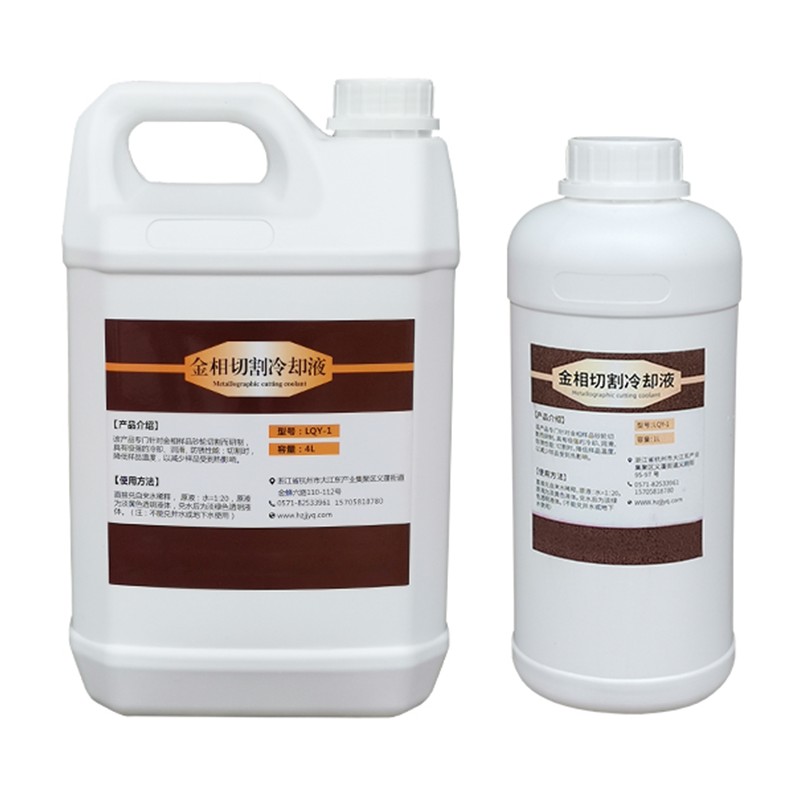 Metallographic Cutting Coolant for Precision Sample CuttingThis coolant dilutes with water at 1:20 to reduce friction and heat, extend blade life, and prevent oxidation. It suits metals, ceramics, and composites, and is environmentally friendly for safe lab use.View Product →
Paired with a blade matched to the material, a correctly applied coolant keeps the sample temperature below the damage threshold while extending blade life.
Best Practices for Preventing Thermal Damage
Preventing thermal damage is a system-level responsibility that involves the machine, the blade, the coolant, and the operator. The cutting disc itself is the first line of defense, and a practical routine should also cover the following points:
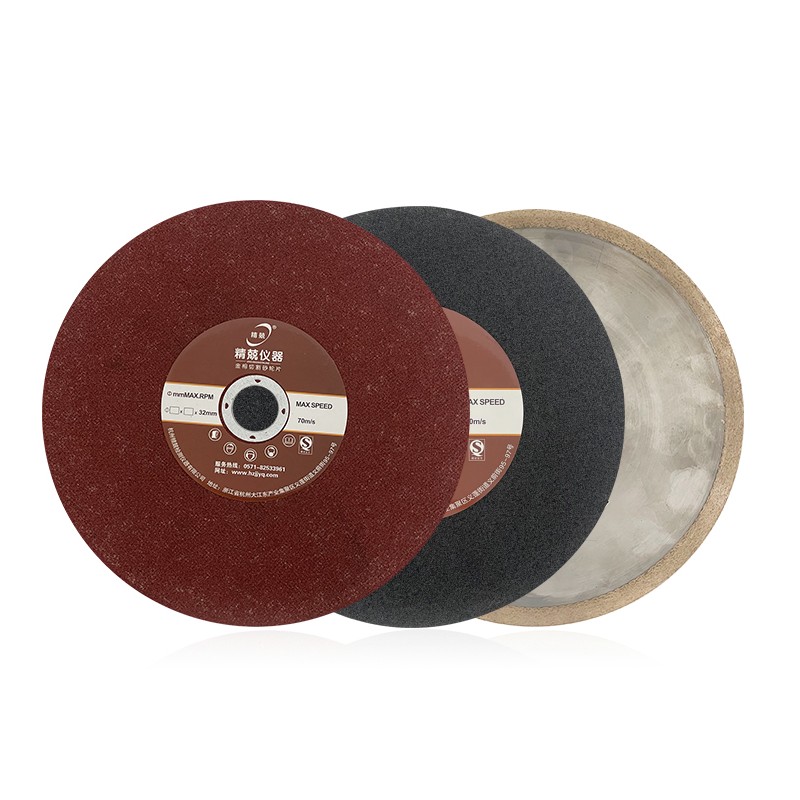 High-Performance Metallographic Cutting DiscThis cutting disc features high-quality abrasives and a strong binder for fast, smooth cuts and longer service life. It is suitable for metals and ceramics, ensuring efficient sample preparation with less post-processing.View Product →
- Choose the correct blade. Use a soft-bond wheel for hard materials and a hard-bond wheel for soft materials. Diamond blades are best for very hard or brittle samples. The bond hardness determines how quickly worn abrasive grains are shed and directly controls the amount of frictional heat.
- Match cutting speed to the material. Reduce wheel speed for heat-sensitive alloys. Precision cutting machines with variable speed control give the operator the flexibility to do this.
- Control the feed force. Let the blade cut at its natural rate. Automatic feed systems and feed-force indicators prevent the operator from pushing too hard.
- Keep the coolant flowing. Verify that the nozzle is not blocked and that coolant reaches the cutting groove on both sides of the blade.
- Let the system cool between cuts. When many samples are cut in sequence, allow the blade and the coolant reservoir to recover between operations.
- Verify with a test sample. Cut and prepare a sacrificial sample, then etch it. A uniformly etched surface without a white layer or a steep hardness gradient confirms that the cut was damage-free.
A precision cutting machine with adjustable speed, automatic feed, and integrated coolant delivery makes these practices repeatable across every batch. By controlling the cutting environment, it removes most of the variability that leads to thermal damage.
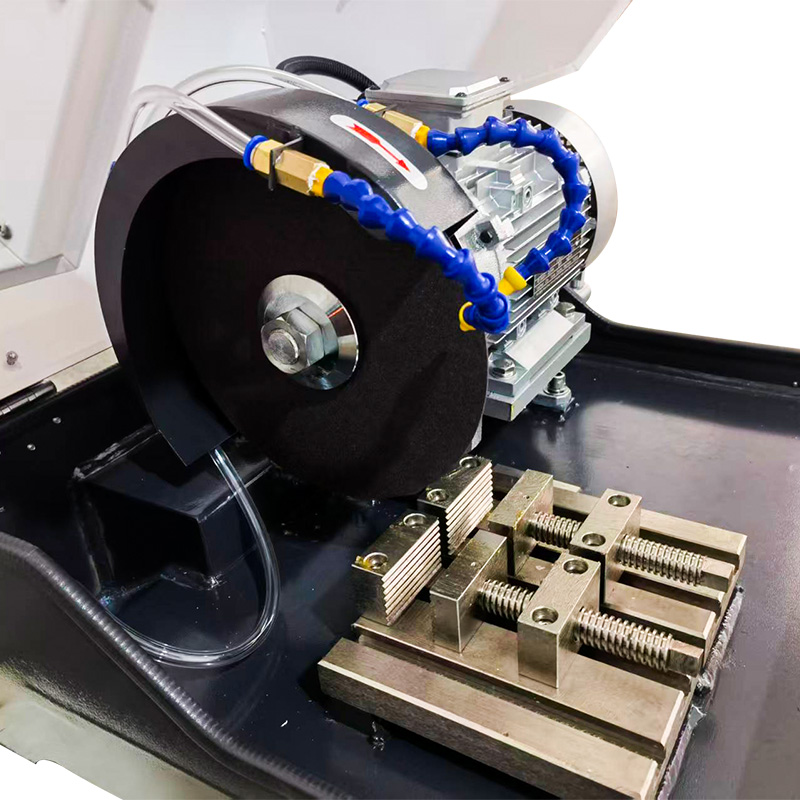 Manual Precision Cutting Machine Q Series and SQ SeriesThese manual cutting machines provide high-precision sectioning with minimal thermal effects. The SQ Series adds improved cooling and adjustable speed, making them versatile for labs and industry to preserve sample integrity.View Product →
Frequently Asked Questions About Thermal Damage and Coolants
Q1: How can I tell whether a sample has thermal damage?
Look for temper colors on the cut surface, then etch a cross-section. In steels, a white layer at the edge usually indicates untempered martensite. In non-ferrous alloys, a recrystallized zone at the edge is the most common sign. Hardness mapping across the cut edge will show a steep gradient if damage is present.
Q2: Can metallographic cutting be done without coolant?
Dry cutting is occasionally used for very small, soft samples with thin diamond blades, but it is never recommended for analytical work. Even a few seconds of dry cutting can push the surface temperature above the transformation point. Whenever the sample has analytical value, coolant should be used.
Q3: What coolant concentration should I use?
Follow the concentrate manufacturer's recommendation, typically 3 to 10 percent for synthetic coolants. Too low a concentration reduces lubricity and corrosion protection, while too high a concentration causes foaming and leaves sticky residues on the sample.
Q4: Does the blade type affect heat generation?
Yes. A dull or mismatched wheel generates far more friction than a sharp wheel with an appropriate bond. Blade condition, grit size, and bond hardness are direct contributors to the heat produced at the cutting interface.
Consistent Cooling Is the Foundation of Reliable Metallography
Thermal damage is not an unavoidable by-product of cutting; it is a preventable artifact. Its root causes are friction, speed, feed, and heat, and the coolant is the common thread that ties them together. A well-chosen coolant absorbs heat, lubricates the cutting zone, and flushes chips away, keeping the sample below the temperature at which the microstructure begins to change.
In practice, thermal damage prevention requires the same discipline as every other step of sample preparation: select the right equipment and consumables, verify the parameters, and inspect the result. When the cutting step is performed correctly with generous coolant flow, the final prepared surface will faithfully represent the material that was meant to be analyzed.

